
Table of Contents
- What Durable Medical Equipment Is Available to Veterans
- VA Durable Medical Equipment Eligibility Requirements
- How to Get Medical Equipment Through the VA: Step-by-Step Process
- Free Medical Equipment for Veterans: Coverage and Costs
- VA Community Care Medical Equipment Options
- What to Do When VA Equipment Doesn’t Meet Your Needs
- Choosing and Using Your Durable Medical Equipment Safely
- Frequently Asked Questions
Last Updated: October 7, 2026
What Durable Medical Equipment Is Available to Veterans
Durable medical equipment for veterans encompasses many devices designed to improve mobility, independence, and quality of life. The VA provides access to prosthetics, orthotics, mobility aids, respiratory equipment, hearing aids, and home medical devices. Understanding what’s available is the first step toward maintaining independence and managing your health effectively.
At Med-Tech Inc, we offer personalized support to ensure the right equipment integrates seamlessly into your daily life. Whether you’re recovering from surgery, managing a chronic condition, or adjusting to a service-related injury, the right equipment can make a meaningful difference in your daily life.
Mobility Aids and Wheelchairs
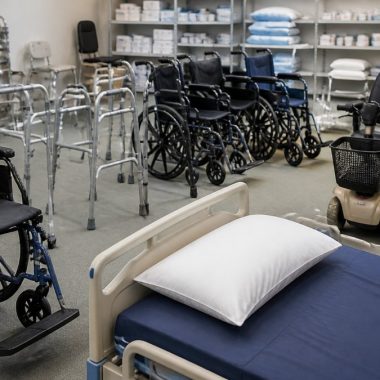
Mobility aids form the foundation of independence for many veterans. Manual wheelchairs, power wheelchairs, walkers, rollators, canes, crutches, and knee walkers address different mobility needs depending on your strength, balance, and living environment.
Manual wheelchairs suit veterans with good upper body strength and accessible spaces. Power wheelchairs serve those with limited arm strength or who need to cover longer distances. Walkers and rollators provide stability for standing and walking.
The VA covers these mobility aids when a provider determines they’re medically necessary. Your specific needs, whether you live in a single-story home, navigate stairs, or travel frequently, should guide which device serves you best.
Prosthetics, Orthotics, and Sensory Aids
Prosthetic and sensory aids address limb loss and sensory disabilities common among veterans. Prosthetics replace missing limbs with functional devices. Orthotics support weakened joints and limbs. Hearing aids restore auditory function, and communication devices assist those with speech impairments.
The VA maintains partnerships with prosthetic manufacturers to ensure veterans receive devices matched to their activity level and lifestyle. Sensory aids include hearing aid batteries, replacement accessories, and advanced communication devices for those with speech or hearing loss.
Respiratory and Home Medical Equipment
Home oxygen systems, CPAP machines, suction devices, and aerosol therapy equipment address respiratory conditions common in veterans. CPAP supplies and oxygen concentrators enable veterans to manage sleep apnea and chronic obstructive pulmonary disease at home.
Hospital beds, catheters, blood pressure monitors, and daily-living aids round out the equipment spectrum. These devices support aging in place and recovery from acute illness or surgery. The VA covers these items when medically justified and prescribed by a VA provider.
VA Durable Medical Equipment Eligibility Requirements
Veterans must meet basic eligibility criteria to access VA durable medical equipment. You must be enrolled in the VA health system and have a current prescription or clinical referral from a VA provider.
Service-connected disability status strengthens your eligibility, but non-service-connected veterans can also access equipment if they’re enrolled in VA care. Geographic location matters: rural veterans may face longer wait times or limited local inventory.
Your VA provider will assess your living situation, mobility level, functional limitations, and health goals before authorizing equipment. This personalized evaluation ensures you receive devices that integrate into your actual life rather than generic solutions that may not fit your needs.
How to Get Medical Equipment Through the VA: Step-by-Step Process
The process for obtaining durable medical equipment for veterans involves several clear steps. Understanding this pathway reduces frustration and accelerates delivery.
Step 1: Obtain a VA Prescription or Clinical Referral
Your VA provider must first evaluate your condition and determine that equipment will support your health and independence. Schedule an appointment with your primary care provider, specialist, or rehabilitation therapist. Describe your functional limitations, daily activities, and goals. The provider documents the medical necessity and specifies the equipment type and features you need.
Some VA medical centers have equipment specialists or physiatrists who focus on mobility and assistive devices. Requesting a referral to these specialists can simplify the process. Bring information about your home layout, stairs, doorways, and lifestyle to help the provider recommend appropriate equipment.
Step 2: Submit Your Request and Authorization
Once your prescription is issued, the VA submits your request to the equipment fulfillment center or authorized vendor. The VA maintains contracts with major equipment manufacturers and suppliers to ensure consistent availability and quality.
You’ll receive notification of authorization, which includes the equipment specifications, any cost-sharing responsibility (usually minimal for eligible veterans), and expected delivery timeframe. If the VA denies your request, you have the right to appeal. The appeals process typically takes 30 to 60 days, during which you can provide additional medical evidence supporting the need for equipment.
Step 3: Equipment Fulfillment and Delivery
The VA arranges delivery directly to your home or to a local VA facility for pickup. Delivery timelines vary: some equipment ships within 2 weeks, while specialized prosthetics or complex custom devices may take 6 to 12 weeks. The VA notifies you of your equipment’s status and expected arrival date.
When equipment arrives, inspect it for damage and verify all components match your prescription. The VA provides basic instruction on setup and use. For complex devices like power wheelchairs or CPAP machines, the VA may schedule a follow-up appointment to ensure proper fitting and operation.
Free Medical Equipment for Veterans: Coverage and Costs
The VA covers the full cost of durable medical equipment for eligible veterans. There are no out-of-pocket charges for equipment deemed medically necessary by a VA provider.
Replacement supplies, such as CPAP filters, hearing aid batteries, catheter supplies, and wheelchair cushions, are also covered at no cost when medically appropriate. The VA periodically reassesses equipment to ensure it remains functional and suitable.
Veterans using community care providers may face different coverage rules. Some community providers bill Medicare or private insurance first, with the VA covering remaining costs. Understanding your specific coverage prevents unexpected bills.
VA Community Care Medical Equipment Options
When the VA cannot provide equipment within a reasonable timeframe or when local VA resources are insufficient, community care programs authorize veterans to obtain equipment from civilian providers. This pathway ensures you don’t wait months for critical mobility aids or respiratory equipment.
Community care equipment providers must be VA-authorized and meet quality and safety standards. You work directly with the civilian provider, who then bills the VA for reimbursement. This option particularly benefits rural veterans and those in areas with limited VA inventory.
Verify that any civilian provider you choose is VA-authorized before purchasing equipment. Unauthorized providers may not be reimbursed, leaving you responsible for the full cost. Your VA provider can help identify approved community care vendors in your area.
What to Do When VA Equipment Doesn’t Meet Your Needs
Sometimes VA-provided equipment doesn’t fit your home, your body, or your lifestyle. The equipment may be too wide for your doorways, uncomfortable after extended use, or simply not suited to your activity level. You have options before resigning yourself to equipment that doesn’t work.
Appeals and Coverage Disputes
If the VA denies your request for equipment or authorizes something you believe is inappropriate, you can appeal. File a Notice of Disagreement with your VA facility within one year of the denial. Provide additional medical evidence, functional assessments, or expert opinions supporting your need for different equipment.
Appeals typically take 30 to 90 days. During this time, you can continue using borrowed or purchased equipment. If the appeal is denied at the local level, you can escalate to the VA’s Board of Veterans’ Appeals, though this process takes longer.
Community Resources and Donated Equipment
Many nonprofit organizations and community programs provide free or low-cost refurbished medical equipment to veterans. Donated equipment programs accept used wheelchairs, walkers, canes, and other devices in good condition, sanitize them, and distribute them to veterans in need.
Local senior centers, veteran service organizations, and disability advocacy groups often maintain equipment lending libraries. These resources provide temporary access to equipment while you await VA authorization or test whether a device suits your needs before committing to purchase. Contact your local veteran service officer or disability resource center for information on donated and refurbished equipment programs in your area.
Choosing and Using Your Durable Medical Equipment Safely
Selecting the right equipment requires careful consideration of your home environment, physical abilities, and daily routines.

Work with your VA provider and equipment specialists to evaluate how equipment performs in your home. Measure doorways, hallways, and bathroom spaces.
Safety depends on proper fitting, training, and maintenance. A wheelchair that’s too wide causes falls. A walker at the wrong height strains your back and shoulders.
Maintain your equipment according to manufacturer instructions. Clean mobility aids regularly to prevent deterioration. Replace worn cushions and worn brake pads on wheelchairs.
| Equipment Type | Primary Use | VA Coverage | Typical Timeline |
|---|---|---|---|
| Manual wheelchairs | Mobility with upper body strength | Full | 2-4 weeks |
| Power wheelchairs | Mobility with limited arm strength | Full | 6-12 weeks |
| Walkers and rollators | Balance support while walking | Full | 1-2 weeks |
| Prosthetics | Limb replacement | Full | 8-16 weeks |
| Hearing aids | Auditory restoration | Full | 4-8 weeks |
| CPAP equipment | Sleep apnea management | Full | 2-3 weeks |
| Home oxygen | Respiratory support | Full | 1-2 weeks |
| Hospital beds | Recovery and positioning | Full | 2-4 weeks |
Frequently Asked Questions
Does the VA pay for durable medical equipment?
Yes, the VA provides durable medical equipment to eligible veterans as part of their healthcare benefits. Coverage includes mobility aids like wheelchairs and walkers, prosthetics and orthotics, hearing aids, respiratory equipment, and home medical devices. The VA determines what equipment is medically necessary based on a clinical evaluation. The VA covers the full cost of durable medical equipment for eligible veterans.
What is the VA durable medical equipment eligibility process?
To be eligible for VA durable medical equipment, you must be an enrolled VA patient and have a service-connected condition or a non-service-connected condition that the VA treats. Your VA healthcare provider must determine that the equipment is medically necessary for your condition. You’ll need a VA prescription or clinical referral, which your provider submits through the VA system. Eligibility is evaluated on a case-by-case basis, and the VA considers factors like your disability rating and the clinical justification for the equipment.
Can veterans get medical equipment through VA community care?
Yes, if you receive care through VA community care programs, you may be eligible for durable medical equipment through that network. Community care providers can order equipment on your behalf, and the VA covers approved items. The process is similar to VA facility ordering: your community care provider submits a prescription or referral, and the VA authorizes and pays for the equipment. If you’re unsure whether your community care plan covers specific equipment, contact your VA care coordinator or the community care provider managing your care.
What should I do if the VA denies my request for medical equipment?
If the VA denies your equipment request, you have the right to appeal. Request a detailed explanation of the denial, which should include the clinical reasoning. You can file a formal appeal with the VA’s Veterans Health Administration or work with your VA provider to request reconsideration with additional clinical documentation. You may also explore alternatives: some nonprofit organizations provide donated or refurbished equipment to veterans, and community medical supply providers can help you purchase equipment independently if the VA denies coverage.
Do veterans need a prescription for VA durable medical equipment?
Yes, you need a VA prescription or clinical referral from your VA healthcare provider to obtain durable medical equipment through the VA. Your provider evaluates your medical condition and determines which equipment is appropriate and medically necessary. The prescription is submitted through the VA’s ordering system, and authorization is required before equipment is dispensed. If you’re receiving care through community care, your community provider can issue the prescription on the VA’s behalf.
Are there free medical equipment options for veterans outside the VA?
Yes, several nonprofit organizations and community resources provide free or low-cost durable medical equipment to veterans. These include veteran service organizations, disability nonprofits, and community health programs that accept donated or refurbished equipment. Some organizations specialize in specific equipment types, like hearing aids or mobility aids. Contact your local VA medical center’s social work department, veteran service officer, or organizations like the Disabled American Veterans (DAV) to learn about available resources in your area.
How long does it take to receive equipment after VA authorization?
Equipment fulfillment timelines vary depending on the type of equipment, whether it’s in stock, and whether customization is needed. Standard items like canes or crutches may arrive within days, while specialized equipment like custom prosthetics or motorized wheelchairs can take several weeks. The VA or your provider will give you an expected delivery timeframe when your order is authorized. If you need equipment urgently, inform your healthcare provider, as they may prioritize your request or suggest temporary alternatives.